
the toolkit
For the moments breath alone will not reach.
Sometimes the mind is too loud to breathe through. Six small tools, a minute or two each, to meet a feeling instead of fighting it.
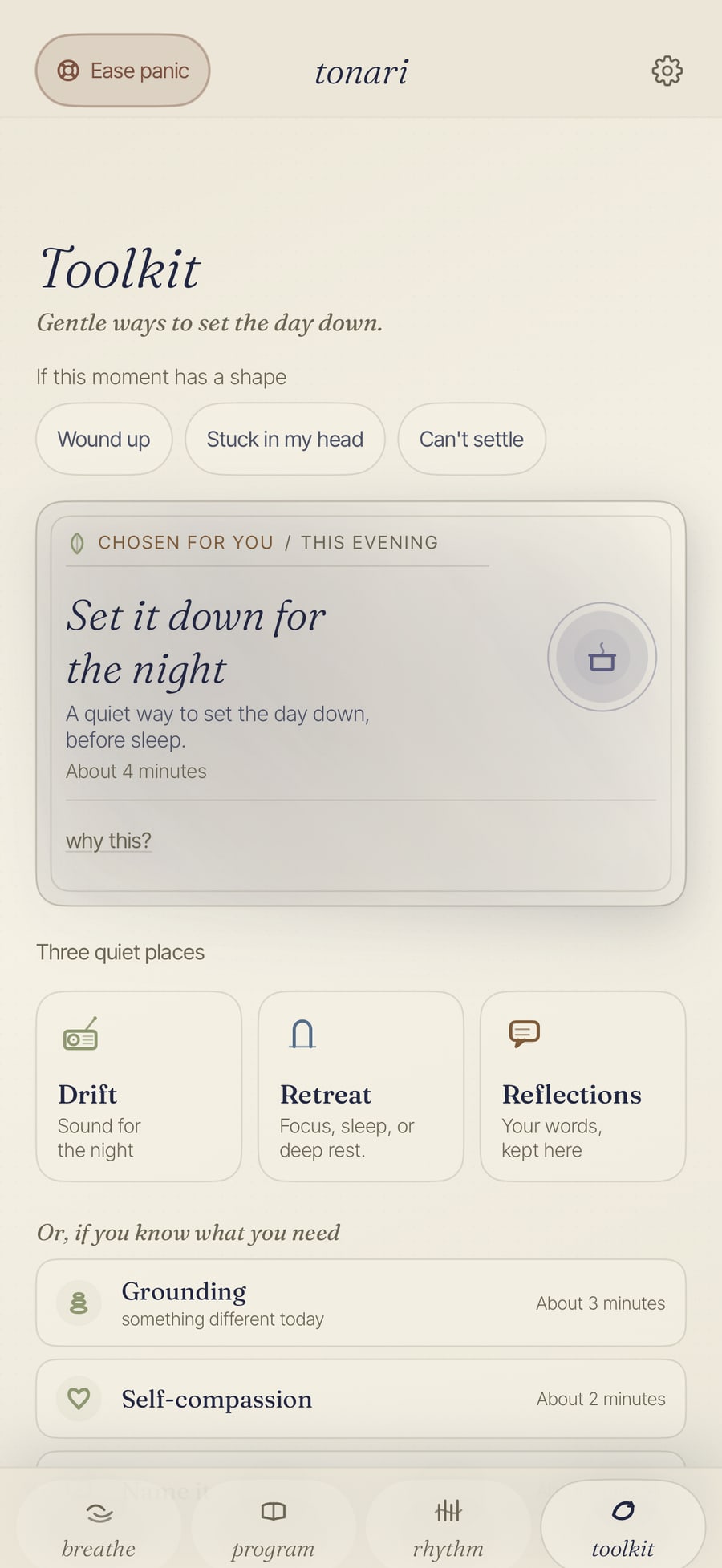
what it is
A small kit, not a library.
Not a thousand exercises to sift through while you feel awful. A handful of steady, guided tools drawn from cognitive and mindfulness care, each one calm, honest about what it does, and quick. Every one starts with a few slow breaths, then a gentle step or two, and it all works offline.
the six tools
Small ways back to yourself.
Name it
for when feelings are a tangled knot
Put a word to what you feel, and it loosens a little. Naming a feeling, what researchers call affect labeling, has been shown in studies to soften how intense it feels. No fixing, just naming.
Grounding
for when you feel panicky or far away
Come back to the room through your senses: five things you can see, four you can touch, three you can hear. A simple pattern that care teams use to bring a spinning mind back to right here.
Self-compassion
for when you are hard on yourself
Meet yourself with the kindness you would offer a friend. It eases the harsh inner voice, and it is a skill you can practise, not a mood you have to wait for.
Ride the wave
for when an urge or craving spikes
An urge rises, crests, and falls on its own. Notice where you feel it, breathe alongside it, and let it move through without acting. It passes, usually sooner than it feels like it will. If the urge is to hurt yourself, please do not ride it alone: contact your local crisis line or emergency services.
Break the loop
for when your mind keeps spinning
A looping worry is stuck in the abstract. Come down to one concrete next step. Moving from spinning to a single small action is how rumination loosens its grip.
Set it down for the night
for the worries that keep you awake
Worry does its work better on paper than in bed. A few minutes before you lie down, write each worry and its smallest next step, and let the night be yours to rest.
A companion, not a cure
These tools draw on ideas that are widely used in cognitive and mindfulness care, and they can genuinely help in a hard moment. They are not therapy, and Tonari never claims to treat a condition. If a feeling is with you most days, or it gets in the way of your life, a doctor or a therapist can help with the longer road. This is a companion for the moment, beside you.
beside the tools
Three quieter companions.
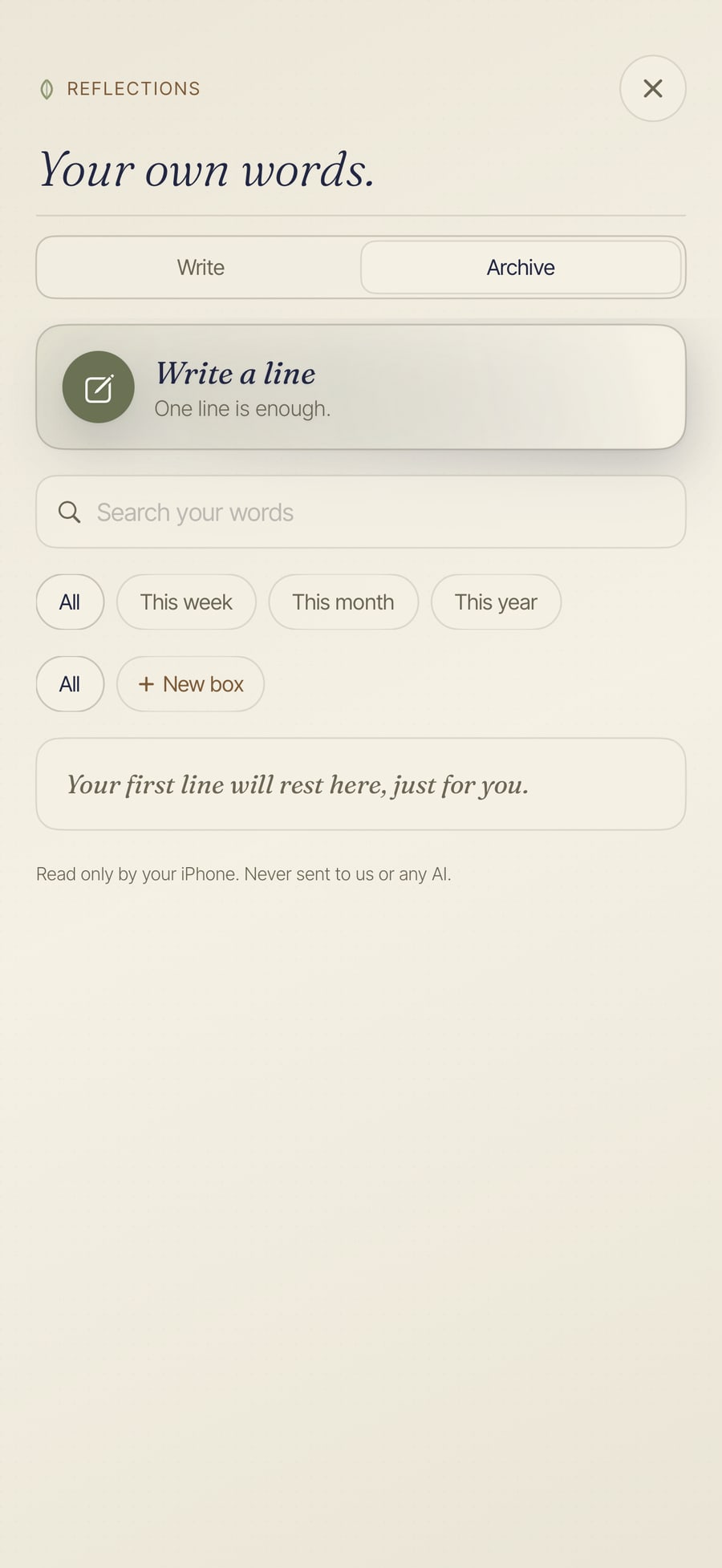
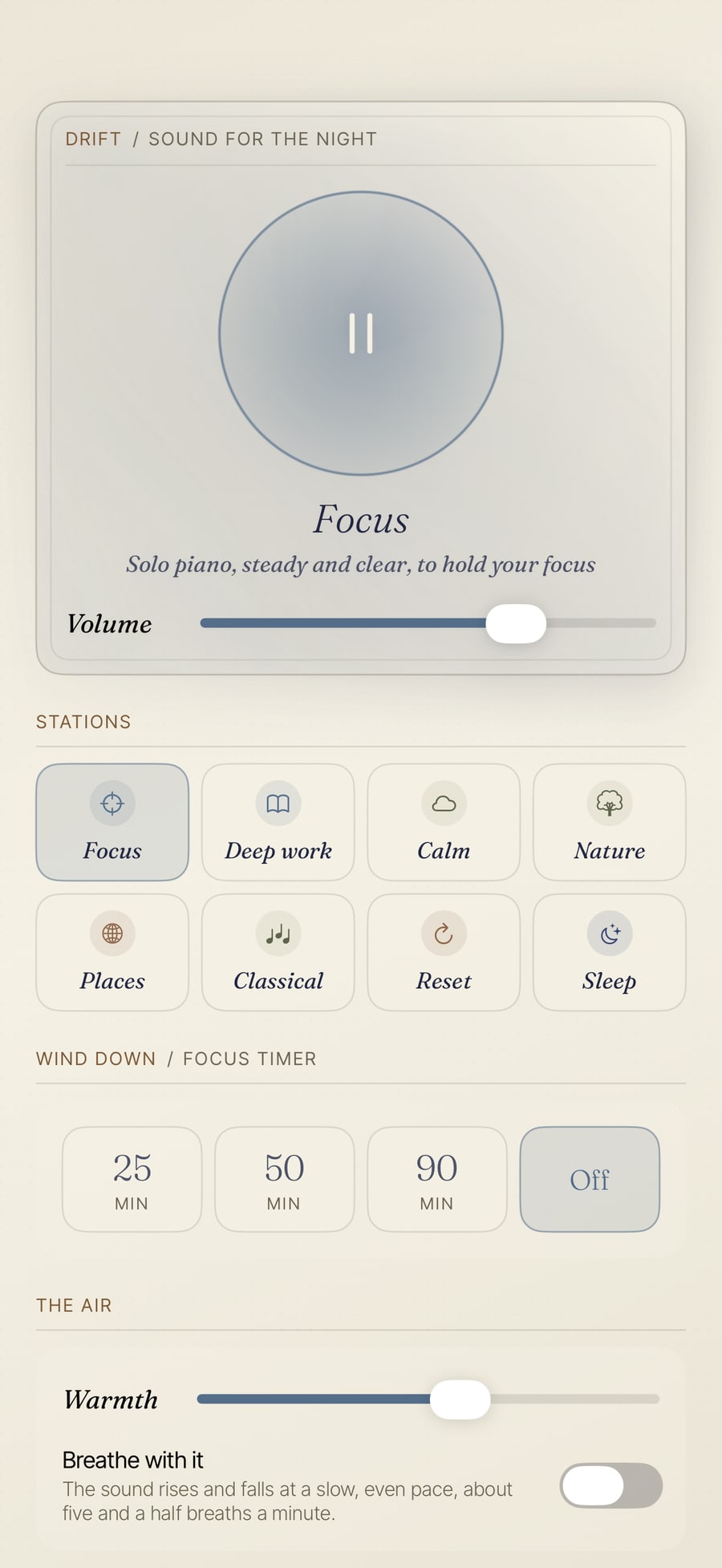
The six tools are for the loud moments. Around them sit three softer ones. Reflections is a private space to write down whatever is heavy, by hand or by voice, kept just for you. Drift is calm soundscapes to rest in when words are too much. And Retreat is a protected stretch of time to focus, take a guarded nap, or be led through a deep rest.
Reflections: set the day down in your own words.
by your moment
Which tool, and when.
Panicking
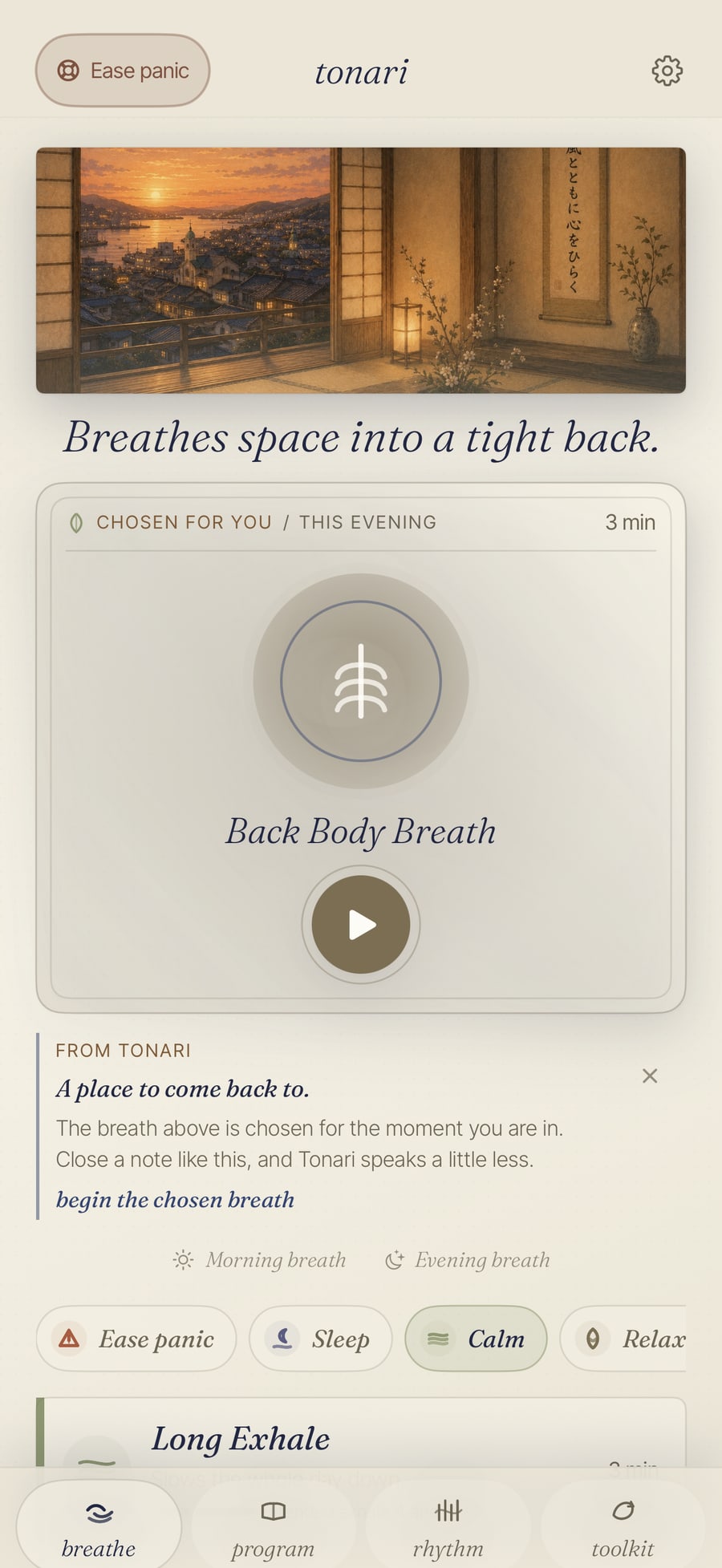
Reach for a one tap Safe Anchor breath first. When you can, Grounding brings you back to the room. See how to stop a panic attack.
Anxious all day
Name it to take the edge off the knot, then Break the loop to turn a spinning worry into one small step. See anxiety relief.
Cannot sleep
Set it down for the night, before you lie down, so the worry stays on paper and not in bed. See breathing for sleep.
Scattered
Break the loop to name the one next step, then settle in with a short, even breath. See breathing for focus.
The whole kit, in your pocket.
Six tools, private and calm, on iPhone.
Free on iOS 17 and later · no account · works offline
Six small tools, one quiet app.
Sign up and I will send a note the day the Toolkit opens on the App Store.
Free on iOS 17 and later · no account · works offline